

Best diamond tennis bracelets in 2026
Best overall starting point: a uniform round-diamond prong-set bracelet. Best for smoother edges: bezel-set; best for a central focal point: graduated; best for buyers who want laboratory-grown diamonds: lab-grown. This 2026 diamond tennis bracelet guide compares those choices and explains what to check before you order.
- Start your diamond tennis bracelet search with a uniform round-diamond design; check wrist fit before choosing total carat weight.
- Bezel settings surround diamond edges with metal; prong settings leave more of each stone exposed.
- Compare lab-grown and natural diamond bracelets separately, with origin clearly identified.
- Tringa Jewelers offers personal help choosing or designing fine jewelry for Staten Island and online shoppers.
For help choosing or designing a piece, ask Tringa Jewelers about your preferred diamond origin, metal and fit. Bring those decisions to the inquiry rather than asking for the biggest bracelet without a wearing plan.
Why this matters
A tennis bracelet is a flexible line of individually set diamonds. Its appeal comes from the complete bracelet, not just a single stone or the total carat weight printed beside it.
The best diamond tennis bracelet is the one that fits your wrist, fastens securely and suits how you actually wear jewelry. A photograph cannot establish those things. Your 2026 shortlist should account for the underside, clasp and articulation as carefully as the top view.
What makes the best diamond tennis bracelet
Use these criteria before comparing styles. They separate a useful buying decision from a comparison based only on diamond weight.
- Wrist fit: Choose a length that moves comfortably without sliding excessively over your hand. Check the actual bracelet length, not just a model photograph.
- Setting profile: Compare how prongs, bezels and connecting links feel against your skin and clothing. A smooth-looking top does not establish a smooth underside.
- Diamond consistency: Look for a balanced appearance across the line. Ask about differences in color, clarity and apparent size rather than assuming every stone matches.
- Clasp construction: Understand how the main closure and any additional safety mechanism work. You should be able to operate both confidently.
- Metal and origin: Confirm gold purity and whether the diamonds are natural or laboratory-grown. Neither metal color nor a photograph establishes diamond origin.
- Service questions: Ask how the specific construction affects length adjustments, repairs and inspections. Do not assume every bracelet allows the same work.
Diamond tennis bracelet styles at a glance
These are buying configurations, not mutually exclusive product categories. A laboratory-grown diamond bracelet can also use bezels, and a graduated bracelet can use prongs. Start with the feature that matters most to you, then specify the remaining details.
| Ranked option | Best for | Standout feature | Key limitation |
|---|---|---|---|
| Uniform prong-set | A consistent line of diamonds | Similar-size stones with exposed edges | Raised or damaged prongs can catch fabric |
| Bezel-set | Buyers prioritizing enclosed diamond edges | Metal surrounds each diamond's perimeter | More visible metal changes the appearance |
| Graduated | Buyers wanting a central focal point | Larger center stones taper toward smaller stones | Rotation changes where the largest stones sit |
| Lab-grown | Buyers specifically choosing laboratory-grown origin | Diamond origin is an explicit selection criterion | Origin alone establishes neither craftsmanship nor fit |
The ranking prioritizes an easy starting point, then distinct preferences. It does not declare one setting, metal or diamond origin best for every buyer in 2026.
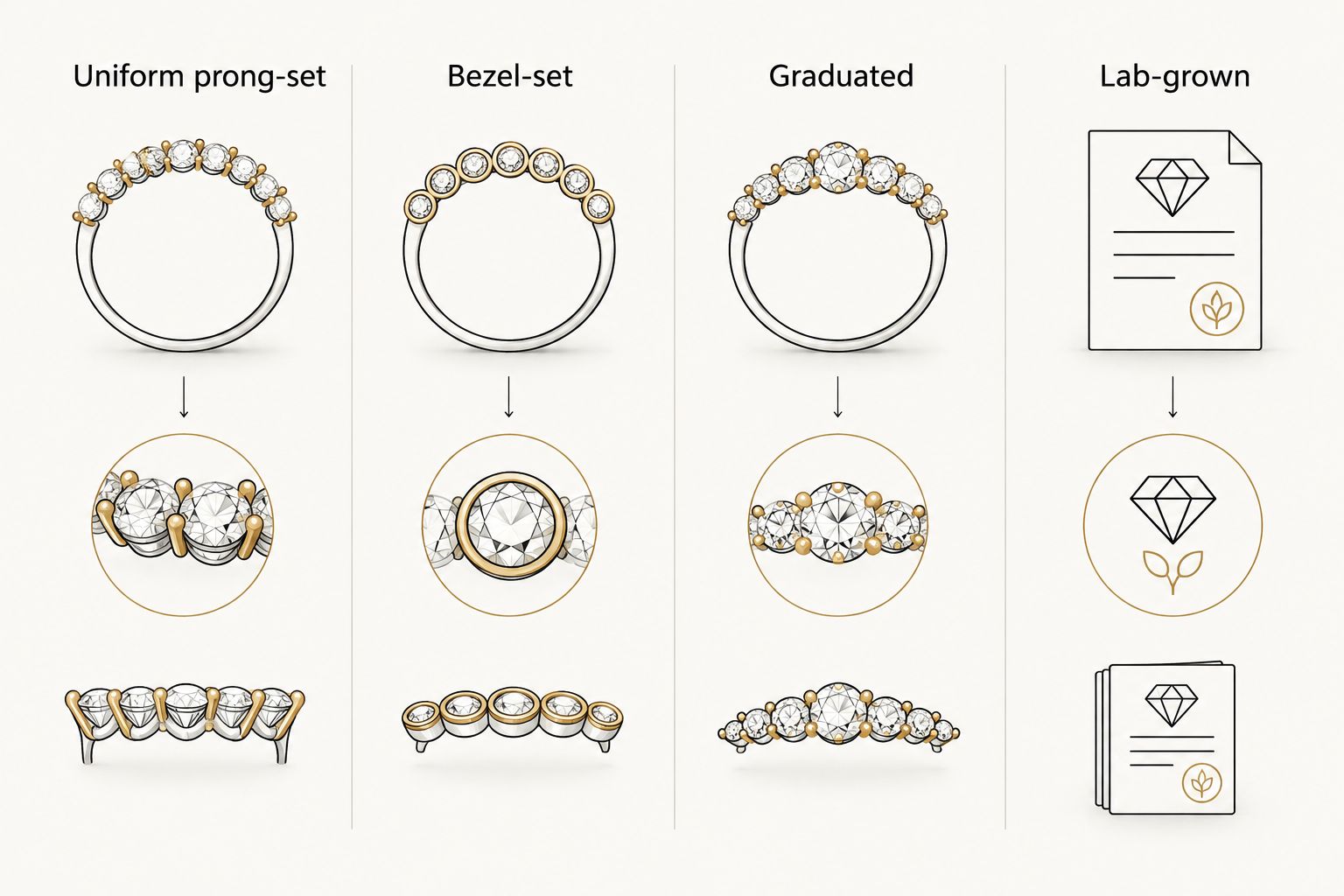
1. Uniform prong-set: best for a consistent diamond line
A uniform prong-set tennis bracelet uses similarly sized diamonds held by small metal prongs. The repeated stone size gives you a consistent line rather than a deliberately larger center section.
Best for: You want a straightforward diamond tennis bracelet without a central focal point. Start here if you are undecided about design, then compare the profile and feel of individual bracelets.
Uniform prong-set pros:
- Similar-size diamonds create visual repetition around the wrist.
- Prongs leave more of each diamond's perimeter exposed than full bezels.
- The uniform layout avoids needing to position a larger center section.
Uniform prong-set cons:
- Raised, worn or damaged prongs can catch fabric.
- The setting name alone tells you nothing about clasp quality or link movement.
Look at the bracelet from the side. Check whether the stones sit high above the links and whether the underside feels comfortable against your wrist. Ask how the diamonds are secured; do not treat a prong count as a substitute for assessing construction.
Verdict: Buy a uniform prong-set design if your priority is a consistent diamond line and the specific bracelet passes your fit and clasp checks.
2. Bezel-set: best for enclosed diamond edges
A bezel-set diamond tennis bracelet surrounds each diamond's perimeter with metal. That border becomes part of the design, making the bracelet read as a sequence of framed stones rather than exposed diamond outlines.
Best for: You prefer enclosed diamond edges and visible metal between the stones. Compare this style if exposed prongs are a concern with your clothing.
Bezel-set pros:
- Metal surrounds each diamond's perimeter.
- The setting avoids exposed retaining prongs around the diamond edges.
- Repeated metal borders create a clearly defined pattern.
Bezel-set cons:
- More visible metal changes the diamond-to-metal balance.
- Bezels do not eliminate the need to check connecting links and clasp edges.
Do not assume every bezel bracelet feels smooth. Run your attention along the entire construction, including the connections between settings. A bracelet can have enclosed stone edges while still feeling uncomfortable underneath.
Verdict: Buy a bezel-set design if enclosed edges matter more to you than minimizing visible metal.
3. Graduated: best for a central focal point
A graduated diamond tennis bracelet places larger diamonds toward the center and smaller diamonds toward the ends. The changing stone sizes create a focal point instead of a uniform line.
Best for: You want the center section to lead the design. Choose this layout for its changing proportions, not simply because its total carat weight sounds substantial.
Graduated pros:
- Larger center stones establish a clear visual focus.
- Tapering stone sizes distinguish the design from a uniform bracelet.
- The layout gives you another way to express a preference beyond metal color.
Graduated cons:
- Bracelet rotation changes the position of the focal section.
- Total carat weight does not explain how the weight is distributed.
Ask to see the full bracelet laid out and worn. Check the transition between larger and smaller stones; your preference might be a subtle taper or a more pronounced change. Neither choice is established by total weight alone.
Verdict: Buy a graduated design if you specifically want a focal section; skip it if you prefer the same appearance around the wrist.
4. Lab-grown: best for a laboratory-grown diamond preference
A lab-grown diamond tennis bracelet uses diamonds produced in a laboratory rather than diamonds formed naturally. Laboratory-grown diamonds are diamonds, not diamond simulants such as cubic zirconia.
Best for: You have decided that laboratory-grown origin matches your preferences. Choose the setting, metal and fit separately; origin is not a bracelet construction style.
Lab-grown pros:
- You can make diamond origin an explicit part of your order.
- Laboratory-grown diamonds can be paired with different setting layouts.
- Clear origin disclosure lets you compare like with like.
Lab-grown cons:
- Laboratory-grown origin does not establish diamond quality or consistency.
- Origin does not tell you whether the bracelet fits or fastens well.
For a 2026 inquiry, request written identification of diamond origin and clarification of any grading information provided. Do not infer that a report for one diamond describes every diamond in the bracelet.
Verdict: Buy a lab-grown design if that origin is your preference; hold if the description leaves origin unclear.
Check fit before increasing diamond weight
A bracelet that looks right in a still photograph can move differently on your wrist. Test it with your arm relaxed, your wrist bent and your hand extended; notice where the clasp and diamond line settle.
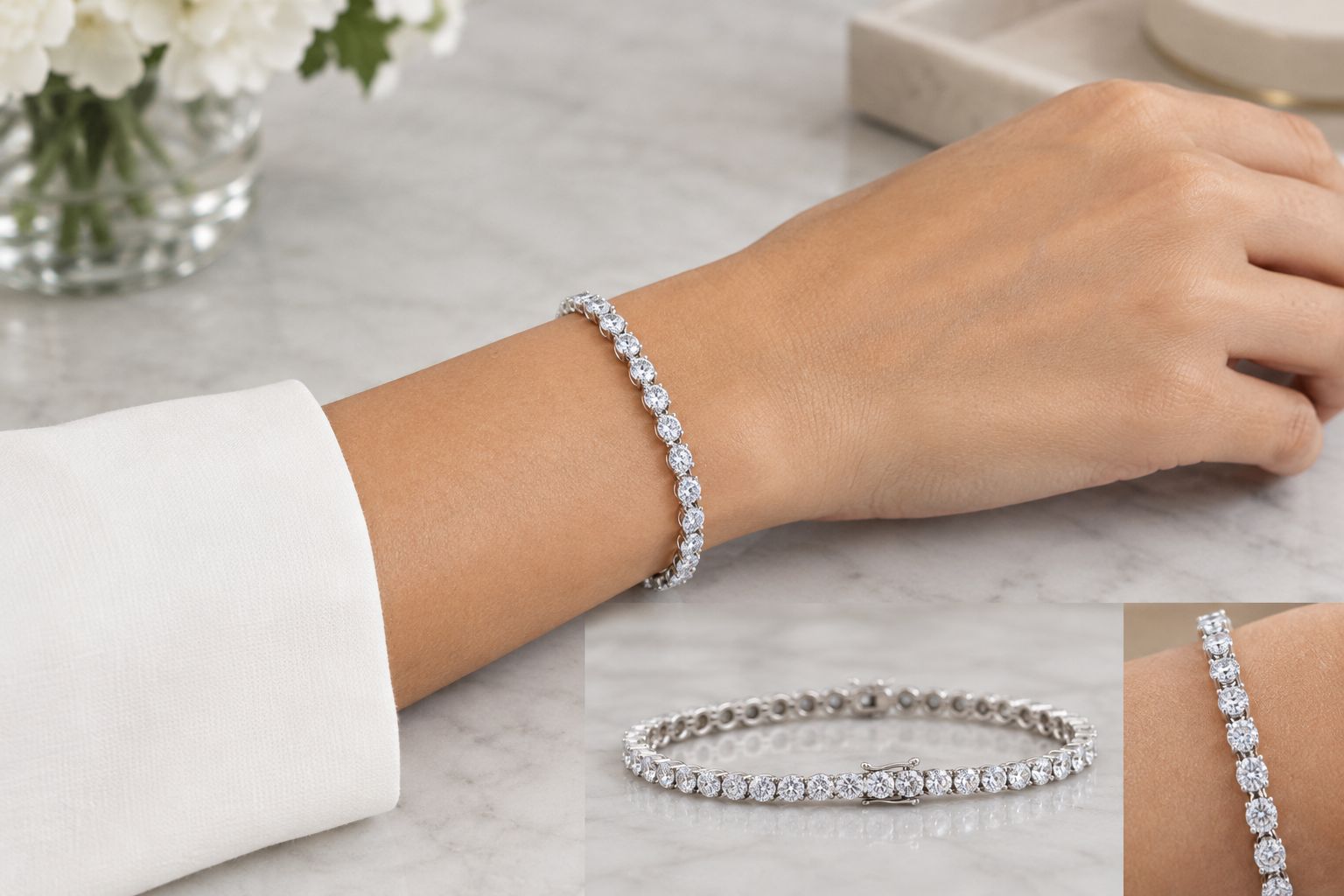
Use this sequence when trying on a bracelet or preparing an online inquiry:
- Measure your wrist: Record the measurement and explain whether you prefer a close or loose fit.
- Confirm bracelet length: Ask for the finished length and how it is measured.
- Check movement: Notice whether the bracelet slides excessively toward your hand or turns uncomfortably.
- Operate the clasp: Understand the main closure and any safety mechanism before wearing it.
- Ask about adjustments: Confirm what is possible for that exact construction before ordering.
For online shopping, a useful question is: what information is needed to recommend the right length for this bracelet? Do not convert your wrist measurement into an assumed finished length without checking the design.
Choose metal alongside your wedding band
Your wedding band is a useful reference because it is jewelry you already wear regularly. Compare its metal color with the bracelet, but make a separate decision about whether you want matching or contrasting metals.
Gold purity describes composition, not a guarantee of construction quality. 14K gold is approximately 58.3% gold; 18K gold is 75% gold. The remaining alloy composition also matters, so purity alone does not establish how a specific bracelet will wear.
For your 2026 selection, confirm these details:
- Metal identity: Ask for the metal and purity, not just the color shown online.
- Finish: For white gold, ask whether the piece has rhodium plating and what maintenance applies.
- Skin sensitivity: Explain any known metal sensitivities and ask about the specific alloy.
- Pairing: Decide whether the bracelet will be worn alone or beside other wrist jewelry.
If you wear a women's diamond eternity band, compare the bracelet's stone pattern with the band rather than requiring identical diamond sizes. Tringa Jewelers is best for Staten Island and online fine-jewelry shoppers who want personal help choosing or designing a piece.
What to include in your bracelet inquiry
A specific inquiry gives the conversation a clear starting point. Tell Tringa Jewelers how you want the diamond tennis bracelet to look and feel, rather than sending only a photograph with no sizing context.
Include:
- Your wrist measurement and preferred fit.
- Natural or laboratory-grown diamond preference.
- Preferred metal color and purity, if decided.
- Uniform or graduated stone layout.
- Prong or bezel setting preference.
- Whether you want to coordinate with a wedding band.
- Any questions about the clasp, adjustments or maintenance.
Staten Island customers can use the same checklist when discussing a store visit. Online shoppers across the United States should request the views and specifications needed to judge the bracelet beyond its main product photograph.
How these styles are ranked
Uniform prong-set comes first because it provides a straightforward reference for a continuous diamond line. Bezel-set, graduated and lab-grown options follow distinct priorities: enclosed edges, a central focal point and diamond origin.
The criteria remain fit, setting profile, diamond consistency, clasp construction, metal and service questions. This 2026 guide ranks configurations, not individual products or claims of tested performance.
Which diamond tennis bracelet should you choose?
Start with a uniform prong-set bracelet if you are undecided. Compare a bezel-set bracelet next if enclosed edges matter more, or a graduated bracelet if you want a larger center section.
Choose natural or laboratory-grown diamonds as a separate decision. Before ordering through Tringa Jewelers, make the inquiry specific enough to resolve fit, origin and construction—not just appearance.
FAQ
What's the best diamond tennis bracelet for a first purchase?
A uniform round-diamond prong-set bracelet is a useful first comparison if you want a consistent diamond line. Check the actual bracelet's fit, clasp and side profile before choosing it.
Is a bezel-set tennis bracelet better than a prong-set bracelet?
A bezel-set tennis bracelet is better suited to buyers who want enclosed diamond edges and more visible metal. A prong-set bracelet leaves more of each diamond's perimeter exposed, so the better choice depends on your preferred appearance and feel.
Are lab-grown diamonds in a tennis bracelet real diamonds?
Laboratory-grown diamonds are diamonds, not simulants such as cubic zirconia. Confirm their origin in the description and assess the bracelet's craftsmanship separately.
How should a diamond tennis bracelet fit?
A diamond tennis bracelet should move comfortably without sliding excessively over your hand or feeling restrictive. Confirm the finished length and discuss your wrist measurement and preferred fit before ordering.
Does higher total carat weight mean a better tennis bracelet?
Higher total carat weight means greater combined diamond weight, not automatically better quality or fit. Compare diamond consistency, weight distribution, setting construction and clasp operation separately.
Can I match a tennis bracelet to my wedding band?
You can coordinate a tennis bracelet with your wedding band's metal color and diamond pattern. Matching diamond sizes is not required; decide whether you prefer a consistent look or contrast.
Can a diamond tennis bracelet be resized?
Length-adjustment options depend on the specific bracelet construction. Ask what changes are possible before ordering rather than assuming that every design can be shortened or lengthened.
One last thing
Practice fastening the bracelet yourself before making the decision. A clasp that looks discreet in a photograph still needs to work comfortably in your hands; ask for a clear demonstration or explanation of the closure and safety mechanism.