

Best oval diamond engagement rings in 2026
Best overall: an oval solitaire. Best for an enclosed stone edge: an oval bezel setting. Best coordinated alternative: the Round Cluster Oval Shape Halo Braid Design Bridal Set, which uses round diamonds rather than an oval center diamond. This 2026 oval diamond engagement ring guide compares setting styles and explains how to choose a compatible wedding band.
- An oval diamond engagement ring with a solitaire setting is the default for buyers who want the center diamond emphasized.
- Compare bezel, cathedral, and halo settings by stone coverage, ring height, and wedding-band clearance.
- Tringa Jewelers offers personal help choosing or designing engagement rings and wedding bands.
- The Round Cluster Oval Shape Halo Braid Design Bridal Set creates an oval outline with round diamonds.
Why this matters
An oval outline does not prove a ring contains an oval-cut diamond. A halo or cluster can create that shape using round diamonds. Decide whether you want a single oval center stone or simply the oval appearance before comparing rings.
Your wedding band belongs in that decision, not at the end. Tringa Jewelers serves Staten Island customers and online shoppers across the United States, with personal help choosing or designing a piece. For your 2026 purchase, make the engagement ring and wedding band a joint decision even if you order them separately.
What makes the best oval diamond engagement ring?
Judge the complete ring against these criteria before choosing a setting:
- Center-stone identity: Confirm whether the center is one oval-cut diamond or a cluster arranged within an oval outline.
- Diamond appearance: Look at the stone in motion, including the dark area across its middle, rather than relying on a still photograph.
- Wedding-band clearance: Check whether your preferred straight or contoured band fits beside the engagement ring without unwanted contact.
- Setting profile: Compare the ring from the side. Height and projecting edges matter when you wear it with clothing or gloves.
- Band independence: Decide whether the wedding band must look complete when you wear it without the engagement ring.
- Specification clarity: Separate center-stone weight from total diamond weight, and confirm the metal and ring size before ordering.
Best oval engagement-ring options at a glance
These are setting recommendations, not a claim that every style is a listed store product. The final row is a named bridal-set alternative with a different center construction.
| Rank and option | Best for | Standout feature | Key limitation |
|---|---|---|---|
| 1. Oval solitaire | A center-diamond focus | A single oval diamond defines the design | Leaves the center stone visually exposed |
| 2. Oval bezel setting | An enclosed stone edge | Metal surrounds the diamond's perimeter | Covers more of the diamond's edge |
| 3. Oval cathedral setting | Buyers prioritizing band clearance | Raised shoulders support the center setting | Height alone does not guarantee a flush fit |
| 4. Oval halo setting | A framed oval outline | Smaller stones surround the center | Adds setting detail beside the wedding band |
| 5. Round Cluster Oval Shape Halo Braid Design Bridal Set | An oval-shaped coordinated set | Round diamonds within an oval halo and a wedding band | Not a single oval-cut center diamond |
1. Oval solitaire: best for a center-diamond focus
An oval solitaire puts a single oval-cut diamond at the center of the design without a surrounding diamond halo. Start here if your first priority is seeing the diamond's shape clearly. You can then choose a plain or diamond wedding band without adding another frame around the center.
Oval solitaire pros:
- Keeps attention on the oval center diamond.
- Makes the center shape easy to distinguish from surrounding decoration.
- Leaves room to make the wedding band the more detailed part of the pairing.
Oval solitaire cons:
- Does not disguise a center diamond you dislike in person.
- A low basket can obstruct a straight wedding band.
- Prong placement remains part of the visible design.
Best for: You want a recognizable oval center and prefer to choose the wedding band's character separately.
Compare the diamond face-up and from the side. Look for an outline you like, then watch how light and dark areas change as the ring moves; a grading report does not replace that visual choice.
Verdict: Buy an oval solitaire if the center diamond is your main priority and the wedding-band fit checks out.
2. Oval bezel setting: best for an enclosed stone edge
A full bezel uses a surrounding metal rim to hold the oval diamond. It gives the stone a defined border rather than the separated contact points of a prong setting. Choose this construction because you like that enclosed edge, not because you expect a ring that needs no care.
Oval bezel setting pros:
- Surrounds the diamond's perimeter with metal.
- Avoids exposed prong tips around the center stone.
- Creates a continuous outline around the oval.
Oval bezel setting cons:
- Covers more of the diamond's edge than an open prong setting.
- Makes the metal border a prominent design feature.
- Still requires a separate check for wedding-band clearance.
Best for: You prefer a contained setting and a visible metal outline around the diamond.
Check the underside as closely as the top. A bezel describes how the diamond is held; it does not tell you whether the basket sits low, whether a band fits beside it, or how the complete stack feels.
Verdict: Buy an oval bezel setting for its enclosed edge; skip it if you dislike a visible metal rim.
3. Oval cathedral setting: best for a band-first search
A cathedral setting has shoulders that rise toward the center setting. It belongs on your shortlist when you want to investigate space for a straight wedding band beneath the raised center. The actual basket and bridge determine the fit, so the word cathedral is not a flush-fit guarantee.
Oval cathedral setting pros:
- Gives the center setting support from raised shoulders.
- Makes the side profile part of the ring's design.
- Provides a useful starting point when comparing straight-band pairings.
Oval cathedral setting cons:
- A taller profile is not right for every wearer.
- Raised shoulders do not establish basket clearance.
- The engagement ring alone cannot confirm the comfort of the full stack.
Best for: You want to choose a straight women's diamond wedding band alongside the engagement ring.
For a 2026 wedding-ring purchase, compare the actual pair from above and from the side. Ask whether the band touches the basket, shoulders, or prongs, and decide whether a visible gap bothers you before choosing.
Verdict: Hold until the intended wedding band has been checked against the specific cathedral setting.
4. Oval halo setting: best for a framed center
An oval halo surrounds an oval center diamond with smaller diamonds. The frame adds detail around the center instead of leaving the stone as the only focal point. Confirm the center cut explicitly: an oval-shaped halo can also surround a cluster of differently shaped diamonds.
Oval halo setting pros:
- Emphasizes the oval outline with a surrounding frame.
- Adds diamond detail around the center.
- Suits buyers who want decoration beyond the shank.
Oval halo setting cons:
- Adds more small-stone settings to inspect and clean.
- Extends the ring's outline beyond the center diamond.
- A projecting halo can affect wedding-band placement.
Best for: You want a framed oval center and prefer a more detailed engagement ring.
Pair the halo with a wedding band before deciding how much additional diamond detail you want. A women's eternity band, a half-set diamond band, and a plain band create different combinations; none automatically fits beneath the halo.
Verdict: Buy an oval halo setting if you want the frame as much as the center diamond.
5. Oval-shaped cluster bridal set: best for a coordinated alternative
The Round Cluster Oval Shape Halo Braid Design Bridal Set uses round diamonds set within an oval-shaped halo and includes an engagement ring and wedding band. Its description states 1.5 carats total diamond weight of natural diamonds. That is total weight, not the weight of a single oval center stone.
Round Cluster Oval Shape Halo Braid Design Bridal Set pros:
- Includes both the engagement ring and wedding band.
- Creates an oval outline using round diamonds.
- Includes a braided design for buyers who want shank detail.
Round Cluster Oval Shape Halo Braid Design Bridal Set cons:
- Does not meet a requirement for one oval-cut center diamond.
- Total diamond weight does not describe one center stone.
- The included wedding band still needs its own comfort and appearance check.
Best for: You want an oval-shaped bridal set and do not require a single oval center diamond.
Ask to see the wedding band alone as well as beside the engagement ring. A coordinated set answers the design-pairing question, but you still need to like each ring independently.
Verdict: Buy for the oval cluster appearance; skip if a single oval-cut diamond is non-negotiable.
Choose the wedding band before you finalize the setting
Tringa Jewelers is best for engagement-ring and wedding-band shoppers who want personal help choosing or designing a piece. Bring your preferred pairing into the conversation, whether you visit in Staten Island or make an online inquiry.
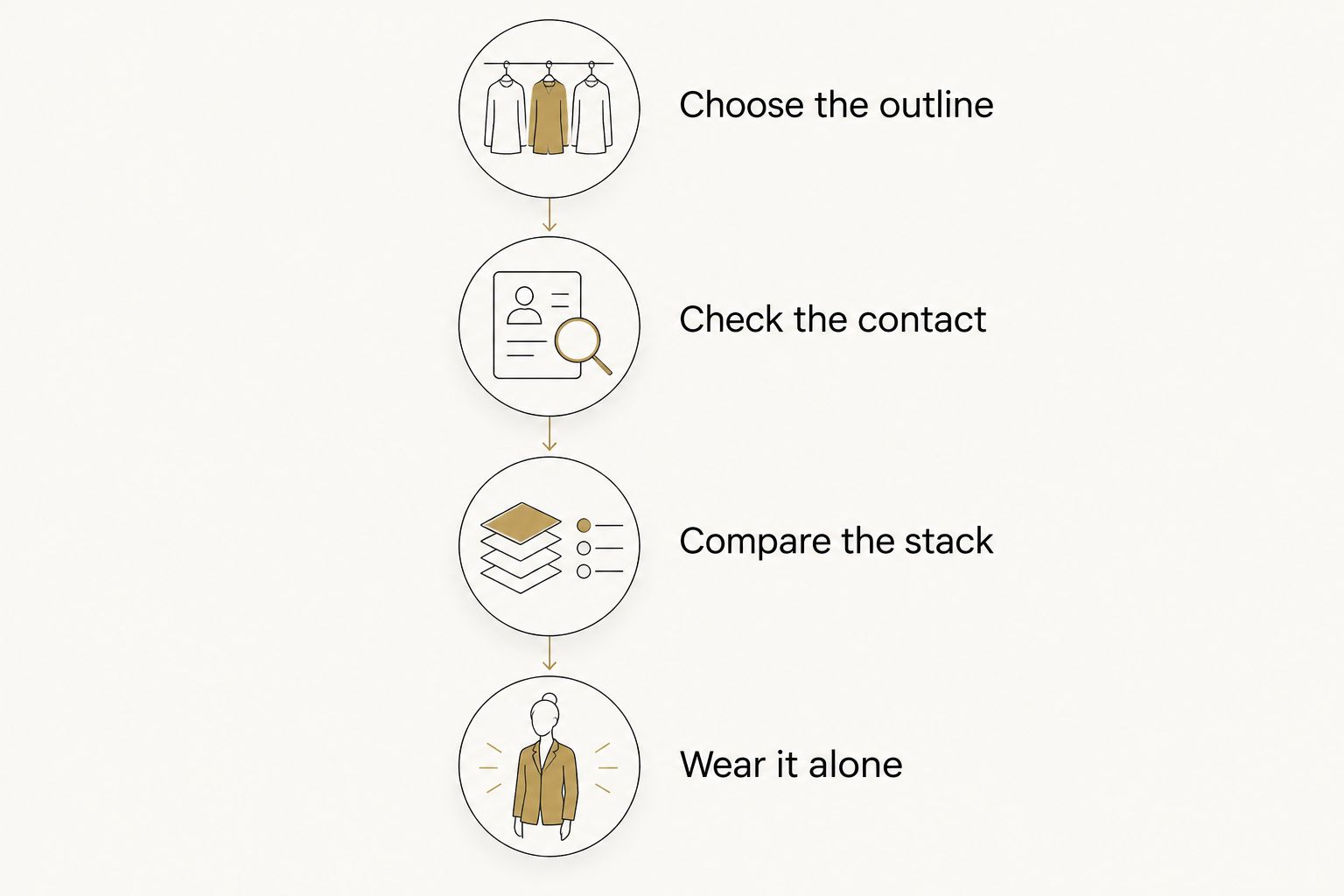
For your 2026 shortlist, use this sequence:
- Choose the outline: Decide between a straight band and a contoured band that follows the engagement ring.
- Check the contact: Identify where the two rings meet, especially near stone settings.
- Compare the stack: Assess the combined width and height, not just the individual rings.
- Wear it alone: Decide whether you like the wedding band without the engagement ring.
For a half-set diamond option, the Class Split-Prong Round Diamond Band has 14 round-cut diamonds set halfway around the band, with 14K yellow, white, or rose gold listed in its description. Its advantage is the choice of metal and half-set layout; its limitation is that it does not provide diamonds around the full circumference. Best for: buyers comparing a half-set wedding band with an oval engagement ring. Hold until the pairing is checked.
The Vintage White Gold Diamond Band is described as 14K white gold with 0.17 carats of natural diamonds. Its stated metal and diamond weight give you a concrete comparison point, but they do not establish its width or engagement-ring clearance. Best for: buyers seeking a white-gold diamond band with vintage styling. Hold until you confirm dimensions and fit.


How the options are ranked
The 2026 ranking starts with center-stone clarity, then separates recommendations by setting construction and wedding-band needs. The solitaire is the default because it puts the oval diamond first; bezel, cathedral, and halo settings answer different preferences rather than representing upgrades.
The cluster bridal set is listed separately because an oval silhouette and an oval-cut center diamond are not interchangeable. No ranking here depends on unreported testing, review scores, or assumed product specifications.
Which oval engagement ring should you choose?
Choose an oval solitaire if you are undecided. Then compare it with your preferred wedding band before committing to the setting. Move to a bezel for an enclosed edge, a cathedral setting to investigate straight-band clearance, or a halo when the surrounding frame is part of what you want.
For a Tringa Jewelers inquiry in 2026, state whether you require a single oval center diamond, your preferred metal, and the wedding-band style you want. Include front and side photographs of any ring the new piece must fit beside. That makes the inquiry about a complete pairing rather than an isolated engagement-ring image.
FAQ
What's the best oval diamond engagement ring style?
An oval solitaire is the default for buyers who want the center diamond emphasized. Choose a bezel for an enclosed edge or a halo when you want a surrounding diamond frame.
Is an oval halo ring always made with an oval diamond?
No, an oval-shaped halo can surround a cluster of round diamonds. Confirm the center-stone cut and construction rather than judging from the outside outline.
What wedding band goes with an oval engagement ring?
A straight or contoured wedding band works when its shape clears the specific engagement setting. Check the pair from the side and identify any contact near baskets or prongs.
Can I wear an eternity band with an oval engagement ring?
An eternity band is an option when its dimensions and settings fit comfortably beside the engagement ring. Confirm sizing and any resizing restrictions before ordering.
Does a cathedral setting guarantee a flush wedding band?
No, a cathedral setting does not guarantee a flush fit. The basket, bridge, and wedding-band dimensions determine how closely the rings sit together.
Is total diamond weight the same as center-diamond weight?
No, total diamond weight combines the diamonds covered by that specification. Ask for the center diamond's individual weight when comparing single-stone oval rings.
Can Tringa Jewelers help me choose an engagement ring and wedding band?
Yes, Tringa Jewelers offers personal help choosing or designing a piece. Explain your center-stone preference and wedding-band requirements when making an inquiry.
One last thing
A small gap is not automatically a pairing mistake. Decide whether you prefer a straight wedding band with visible space or a contoured band that follows the engagement ring. The better choice is the pair you like together—and the wedding band you still want to wear on its own.